


MADRID – Researchers have begun testing whether immunologic modification can forestall rheumatoid arthritis in people at high risk for the disease and also have identified smoking and overweight as two modifiable risk factors strongly linked to disease onset.
In a group of 55 people without rheumatoid arthritis (RA) who were enrolled because of a family history of RA or a positive RA blood marker, those with an elevated body mass index (BMI) who also smoked had a greater than seven-fold increased rate of incident RA, compared with lower-BMI people and nonsmokers, Dr. Danielle M. Gerlag said at the annual European Congress of Rheumatology.
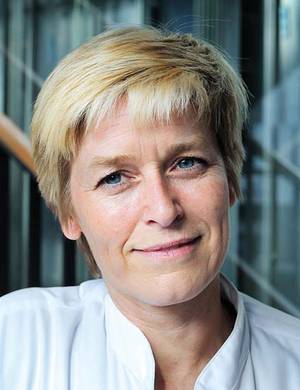
Dr. Danielle Gerlag
The finding raises the possibility that weight loss and smoking cessation may be effective tools for preventing RA, said Dr. Gerlag, a rheumatologist at the Academic Medical Center in Amsterdam.
The finding came from 55 people she and her associates recruited because they were either first-degree relatives of RA patients or because they tested positive for either IgM anti-rheumatoid factor or anti-ctirullinated protein antibody or both. Their average age was about 45 years, and two-thirds were women. During a median follow-up of 27 months, 15 people (27%) developed RA. Two baseline characteristics stood out as strongly associated with RA incidence: history of smoking and a BMI of 25 kg/m2 or greater (Ann. Rheum. Dis. 2012;doi:10.1136/annrheumdis-2012-202254).
Patients who had both a history of smoking and an elevated BMI had a statistically significant, 7.5-fold increased rate of RA during follow-up, compared with all the others in the study group, including those who had smoked but were not overweight and those who were overweight but had never smoked.
Dr. Gerlag and her associates also have collected evidence for several specific changes in T and B cell profiles that link with subsequent development of early RA, which led to the hypothesis that a treatment aimed at dampening immune-cell activation might contain RA development. To explore this possibility, they have treated 75 people at high risk for developing RA with a single 1-g dose of rituximab (Rituxan). So far, during a median follow-up of 19 months, 16 patients (21%) have developed RA, she said.
Dr. Gerlag said that she had no disclosures.
On Twitter @mitchelzoler