


"But at my back I always hear/ Time’s winged chariot hurrying near."
Andrew Marvell (1621-1678), "To His Coy Mistress"
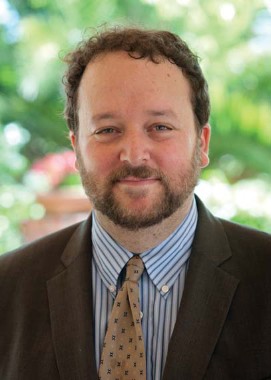
Dr. Michael Brodsky
At press time, John Green’s young-adult novel "The Fault in Our Stars" (New York: Penguin Group, 2012) has sold more than 10.7 million copies and has been translated into 46 languages, the Washington Post reports. Although derided by some as maudlin and clichéd, most reviewers have offered high praise for the emotional and clinical realism of the story, and National Public Radio has called the author’s writing style "so compulsively readable that it defies categorization."
Critics have praised Mr. Green for his witty yet rueful dialogue and his incisive, seemingly effortless allusions to Kierkegaard, Shakespeare, Abraham Maslow, and the profound existential dilemmas confronted by the story’s protagonists, two adolescents with cancer. Green knows much about this topic; he previously led a pastoral support group for teens with cancer, and he befriended a particular 16-year-old girl to whom the book is dedicated posthumously.
The story centers on the romance of Hazel, a 16-year-old with metastatic thyroid carcinoma, and Augustus, a survivor of osteosarcoma, whom she meets in a support group for teens at the local church. Theirs is a whirlwind romance, fueled by the exuberance of adolescence conflated with the very real prospect that their lives will be radically foreshortened by a dreaded recurrence or progression of disease. (A movie based on the novel opened across the country this summer.)
Though adults surrounding the couple often regard them with a mixture of pity and sympathy, neither Hazel nor Augustus sentimentalizes their plight, and both are realistic about the likelihood of an unhappy conclusion of their romance. More than once, Hazel warns Augustus to keep his feelings in check because "I am a grenade" whose medical decompensation will someday wreak emotional havoc among those close to her. Faced with the grim possibility of an untimely ending, Hazel and Augustus seek to make the most of the "little infinity" of intimate moments that they have together.
The premise of TFIOS reminded me of the work of the writings of the psychologist Rollo May and the psychiatrist Irvin D. Yalom, who urged psychotherapists to bear in mind the larger existential questions, termed by Dr. Yalom "ultimate concerns," that underlie many of the fears and anxieties that patients bring into our offices. In his magisterial Existential Psychotherapy (New York: Basic Books, 1980), Yalom classifies these concerns in four broad categories: Death, Freedom, Isolation, and Meaninglessness. Somehow, without becoming heavy handed, this novel manages to touch on all of these themes without resorting to excessive sentimentality.
Patients seek out our psychiatric assistance at moments when the burden of their emotional suffering becomes too much to bear. Sometimes, the stressors that lead to a clinical worsening are acute and unforeseen; but more often, the presenting problem offered by patients reverberates with more profound and longstanding doubts and fears. Many of these doubts and fears stem from the existential uncertainties and precarious nature of every human life. There are no guarantees that our patients will find the courage and emotional security to overcome these fears, but we in this field have the privilege to try to lend a hand along the way.
Dr. May and Dr. Yalom urge us to bear in mind the existential realities of our patients’ lives as we listen to their stories and their symptoms. Their time on earth is short, in the grand scheme of things; they struggle to feel that their efforts and challenges and disappointments are in any way meaningful; and ultimately, they (and we) will die alone. The protagonists of TFIOS face these stark truths on a grossly and unfairly accelerated timeline, and they find a way to make the most of the choices that are available to them. True, this is a work of fiction, but fortunately one drawn with more than a modicum of emotional realism. We will serve our patients well if we can find a way – gently – to draw their attention to the tougher realities of their existence, no matter whether their symptoms are anxious, depressed, manic, or psychotic. Then, if possible, we can seek to ease the distress that brought them to our office in the first place, so that they can move forward in their efforts to make the best of their time here.
Dr. Brodsky is assistant clinical professor of psychiatry at the University of California, Los Angeles, and the medical director of Bridges to Recovery in Pacific Palisades, Calif.