

Radiology Review
From Revved Up to Banged Up
A motorcyclist is brought to your facility after crashing into another vehicle. There is obvious trauma to his head, face, and extremities. See...
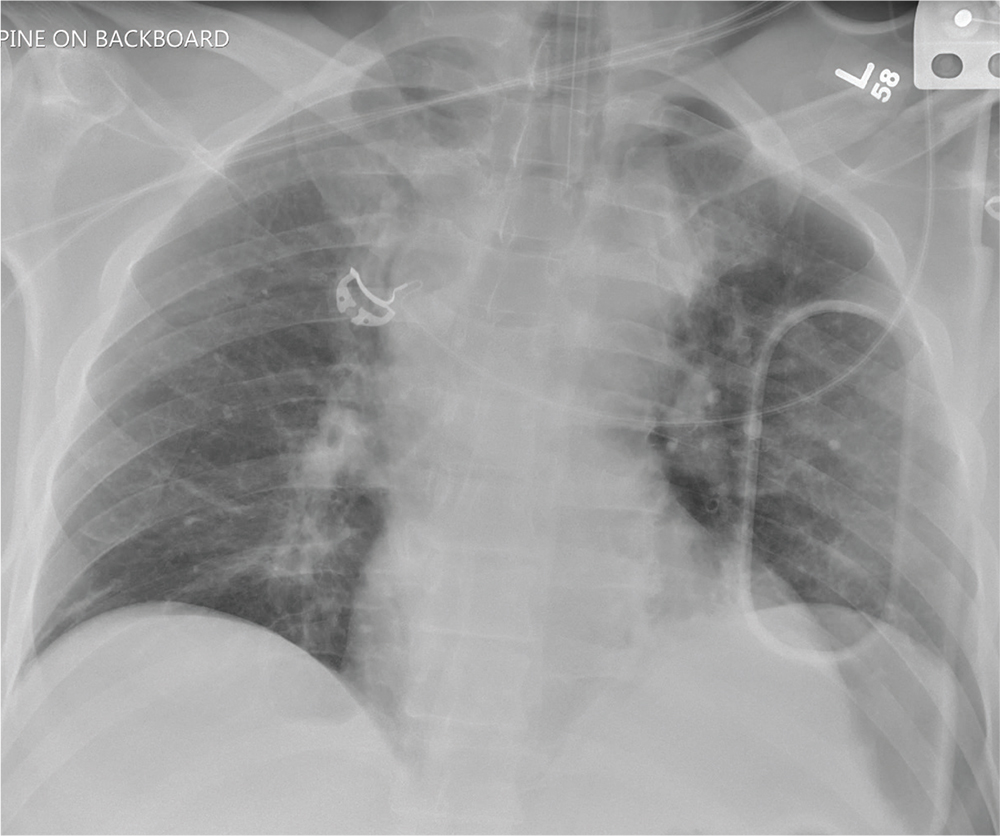
A 40-year-old construction worker was remodeling a home when the roof collapsed. The patient’s head, face, and chest were reportedly struck by a large metal support beam. He was taken to a local facility, where he was found to have decreased level of consciousness and was combative. He was intubated for airway protection and sent to your facility for tertiary level of care.
History is limited. On arrival, you note a male patient who is intubated and sedated. His blood pressure is 90/60 mm Hg and his heart rate, 130 beats/min. A large laceration on his forehead and scalp has been primarily closed. His pupils are unequal, but both react. Neurologic exam is limited secondary to sedation.
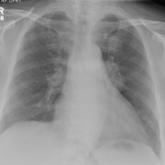
As you complete your primary and secondary surveys, a portable chest radiograph is obtained (shown). What is your impression?
A motorcyclist is brought to your facility after crashing into another vehicle. There is obvious trauma to his head, face, and extremities. See...
Following a motor vehicle collision, a 60-year-old man has pain in his chest, head, and arm. He has no reported medical history; is his pain a...
A 65-year-old woman has been experiencing left-side weakness for mroe than two months, and she reports that it's worsening with time. Find out...