

Dr. Leistner said that he had no disclosures. Dr. Zeiher said he is a cofounder of and scientific advisor to t2cure, a company set up to run the BAMI trial, sponsored by the European Union.
News
Stem Cell Treatment of MI Yields 5-Year Benefit

View on the News
Five-Year Results Justify Larger Trial
The Frankfurt group’s report that the early, 4-month improvement in left ventricular ejection fraction that they reported several years ago was associated with better clinical outcomes after 5 years is an important finding. It’s notable that they found this association even though the improvement at 4 months was modest. In addition, this study remains the largest study of bone-marrow cell treatment of acute MI patients and now is also the study with the longest reported follow-up.
Investigators have reported mixed results over the past 10 years from several pilot studies that assessed stem cell treatment of myocardium following an acute MI. As recently as last week, at Transcatheter Cardiovascular Therapeutics 2011 in San Francisco, Wöhrle and his associates reported results from a study very similar to the design of the REPAIR-AMI study but without similar evidence of efficacy. The only apparent difference in the two protocols was that the Wöhrle study infused heparin-treated bone marrow–derived cells, while the Frankfurt group specifically avoided exposing these cells to heparin. Heparin treatment also may have played a role in other negative studies. Heparin changes cell surface receptors, perhaps preventing them from localizing in the myocardium.
 |
|
Another recent report found positive short-term, 4-month results in a study that randomized 23 patients to an intracoronary infusion of cardiac stem cells (Lancet 2011; doi:10.1016/S0140-6736(11)61590-0).
A key issue currently unresolved is the mechanism by which the infused bone-marrow monocytes produce a beneficial effect. We know these cells do not differentiate into myocytes, nor do they trigger cardiomyogenesis. The cells may augment natural healing or activate endogenous repair, activate resident cardiac stem cells, stimulate angiogenesis, or mediate repair by a paracrine mechanism.
Stem cell treatment of the myocardium following an acute MI is a potentially exciting intervention. I encourage the Frankfurt researchers to pursue this potential in the expanded BAMI trial they have planned. But in addition to this attempt to obtain additional evidence for a clinical benefit from bone marrow cell treatment, further research is also needed to better define the mechanism by which this treatment leads to benefit.
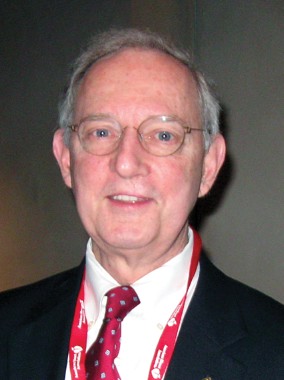
Robert O. Bonow, M.D., is professor of cardiology at Northwestern University in Chicago. He said that he had no disclosures. He made these comments as the invited discussant for the report by Dr. Leistner and in an interview.
FROM THE ANNUAL SCIENTIFIC SESSIONS OF THE AMERICAN HEART ASSOCIATION